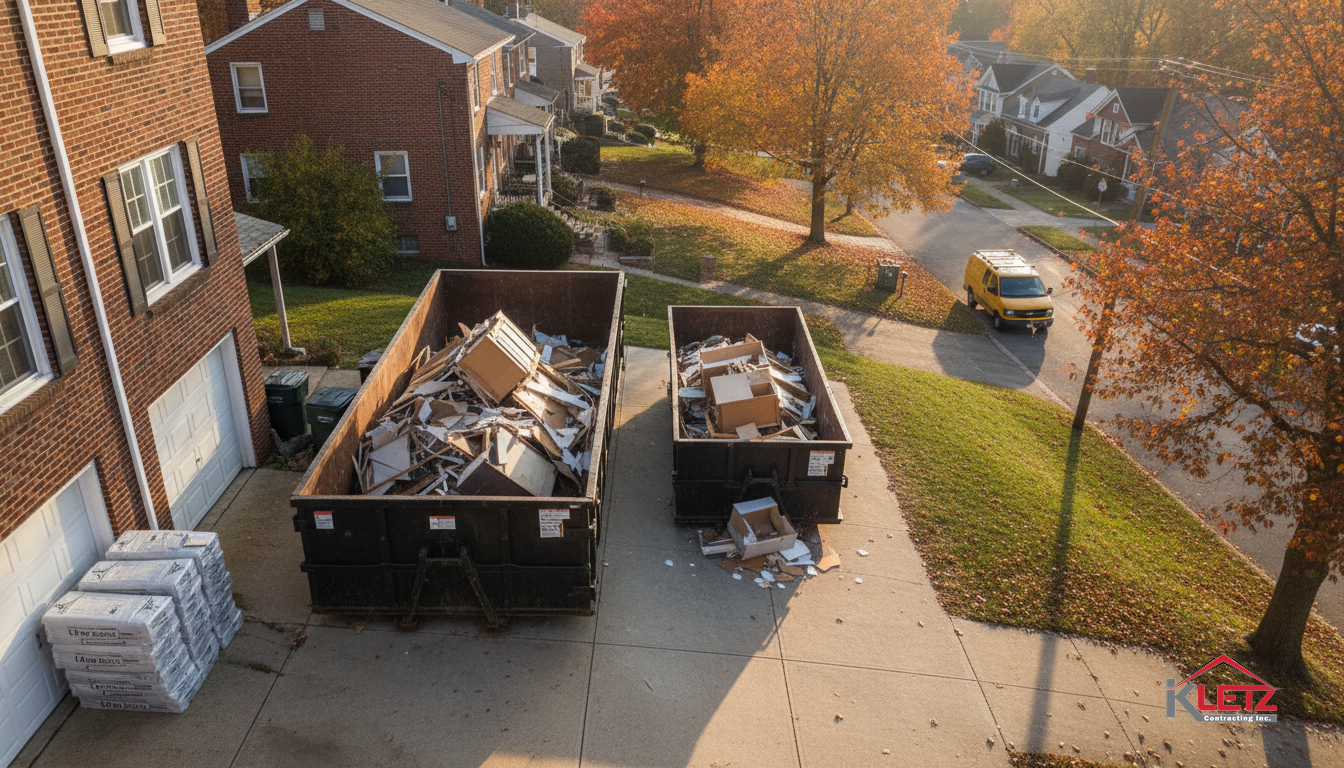
There's a moment every Pittsburgh homeowner dreads: it's day two of your bathroom renovation, you've got half a kitchen's worth of drywall and old tile still to go, and your dumpster is already piled so high the lid won't close. The extra haul fee hits your phone as a notification before the coffee even finishes brewing.
It doesn't have to go that way. Choosing the right dumpster size before your project starts is one of the simplest ways to protect your renovation budget — and it's a step most people skip entirely. Here's everything you need to know before you book.
Why Dumpster Size Matters More Than You Think
Renting a dumpster that's too small doesn't just mean an overflowing bin. It can mean:
- Overage fees charged by the ton when you exceed weight limits
- Swap-out costs to have a full dumpster pulled and replaced mid-project
- Project delays while you wait for the new unit to arrive
- Safety violations if debris is piled above the fill line
On the flip side, renting too large is just wasted money — especially in tight residential neighborhoods across Allegheny, Beaver, and Butler Counties where driveway space is already at a premium.
The goal is to match your container size to your specific project and debris type. Here's how to do it.
The Dumpster Sizes We Offer and What They're For
10-Yard Dumpster
Best for: Small cleanouts, single-room remodels, minor landscaping
A 10-yard dumpster holds roughly 3 pickup truck loads of debris. It's the right call for smaller jobs where you're not gutting an entire space — think a bathroom tile replacement, a basement declutter, or hauling old furniture and appliances after a partial renovation.
Real example: A homeowner in Moon Township remodeled a single bathroom — pulled out an old vanity, toilet, flooring, and drywall from one wall. A 10-yard container handled it with room to spare.
Weight limit to watch: Typically 1–2 tons. Heavy materials like ceramic tile or concrete can max this out fast.
12-Yard Dumpster
Best for: Moderate cleanouts, multi-room light remodels, small deck teardowns
The 12-yarder is the ideal middle-ground option that gives you a little more breathing room than a 10-yard without jumping to the largest size. If your project spans more than one room but you're not doing a full gut job — think a bathroom plus a hallway flooring replacement, or clearing out a cluttered garage alongside a small demo — this size hits the sweet spot.
Real example: A Beaver County homeowner cleared out a two-car garage packed with old furniture and construction remnants, then demoed a small laundry room. The 12-yard unit handled both phases without needing a swap.
Weight limit to watch: Like the 10-yard, keep an eye on heavy materials. A mix of light debris and a moderate amount of tile or drywall is manageable — but loading it with dense materials like brick or concrete will push the weight limit quickly.
15-Yard Dumpster
Best for: Kitchen remodels, larger room gut-outs, roofing jobs, whole-room additions
The 15-yarder is our largest container and the go-to choice for more serious residential renovation work in the Pittsburgh area. It fits roughly 4–5 pickup truck loads and handles the kind of mixed debris that comes with a real gut job — framing lumber, insulation, drywall, old fixtures, and flooring all at once. It's also well-suited for roofing tear-offs on smaller homes or detached garages.
Real example: A Washington County family gutted a finished basement after a water intrusion event — carpet, drywall, drop ceiling, insulation, and old fixtures. One 15-yard container handled the entire demo phase cleanly.
Weight limit to watch: If you're pulling a lot of concrete, brick, or roofing shingles, be honest about the weight before you load. Dense materials add up faster than most people expect — you may need to plan for a mid-project swap rather than trying to cram it all in at once.
Debris Types That Change the Equation
Size isn't just about volume — it's about weight. Some materials are deceptively heavy:
| Debris Type | Weight Per Cubic Yard |
|---|---|
| Asphalt shingles | ~1,500 lbs |
| Concrete / masonry | ~3,000 lbs |
| Drywall | ~500 lbs |
| Wood framing | ~300 lbs |
| Mixed household debris | ~400–600 lbs |
If your project involves a lot of shingles, brick, or concrete, pay close attention to weight limits regardless of which container size you choose. Volume and weight are two different problems — and weight is the one that catches most homeowners off guard.
Questions to Ask Before You Rent
Before calling to book your dumpster, run through these questions:
- What rooms or areas am I renovating? (One bathroom vs. a full kitchen changes everything.)
- What materials am I removing? (Light drywall vs. heavy tile vs. old roofing shingles.)
- Do I have contractor debris mixing with residential debris? (Let your rental company know — some materials may require separate disposal.)
- How long do I need the dumpster on-site? (Longer projects may benefit from sizing up to avoid multiple swaps.)
- Where am I placing it? (Driveway space in many Pittsburgh-area neighborhoods is tight — confirm dimensions before delivery.)
The Kletz Approach to Getting It Right
At Kletz Contracting, we've been handling roofing, siding, and remodeling projects across Allegheny, Beaver, Butler, and Washington Counties long enough to know what happens when homeowners guess wrong on dumpster size. We offer dumpster rental alongside our contracting services specifically because coordination matters — the last thing you want is your renovation stalled because a container issue wasn't planned for.
When you work with us, we can help you estimate the right container size based on the actual scope of your project — not a generic chart.
Bottom Line
The right dumpster size comes down to three things: the scope of your project, the type of debris you're generating, and an honest estimate of volume and weight. When in doubt, size up. The cost difference between a 10-yard and 12-yard — or a 12-yard and 15-yard — is almost always less than the cost of a mid-project swap.
Planning a renovation in the Pittsburgh area? Contact Kletz Contracting to get help sizing your dumpster rental — and to handle the roofing, siding, or remodeling work while you're at it.