If you've lived in the Greater Pittsburgh area for more than one winter, you already know the drill: a bitter cold snap, a mid-January thaw that feels almost like spring, then another hard freeze by the weekend. It's just Pittsburgh weather — unpredictable, relentless, and frankly a little personal.
What most homeowners don't realize is that this pattern isn't just annoying. It's actively working against your roof, week after week, from November through March. By the time you notice a water stain on your ceiling or a shingle in the yard, the damage has usually been building for months.
Here's what's actually happening up there — and what you can do about it before a minor problem becomes a full roof replacement.
The Science Behind the Damage: Freeze-Thaw Cycles Explained
Pittsburgh sits in a weather zone that makes it uniquely brutal for roofing materials. According to historical climate data, the Pittsburgh area experiences dozens of freeze-thaw cycles every winter — meaning temperatures that cross the 32°F threshold repeatedly throughout the season.
Every time this happens, here's what occurs on your roof:
- Snow and ice melt during a warmer stretch, sending water into every tiny crack, gap, and seam in your roofing materials.
- Temperatures drop again, and that water freezes. Water expands by about 9% when it freezes — and it expands with tremendous force.
- Shingles crack, lift, and separate. Flashing pulls away from chimneys and walls. Underlayment compromises. Seal strips fail.
- The cycle repeats, each time widening those gaps a little more.
By spring, what started as a hairline crack in a shingle or a slightly loose piece of flashing has become a legitimate leak path — and you've been none the wiser all winter.
The Three Biggest Threats to Pittsburgh-Area Roofs
1. Ice Dams
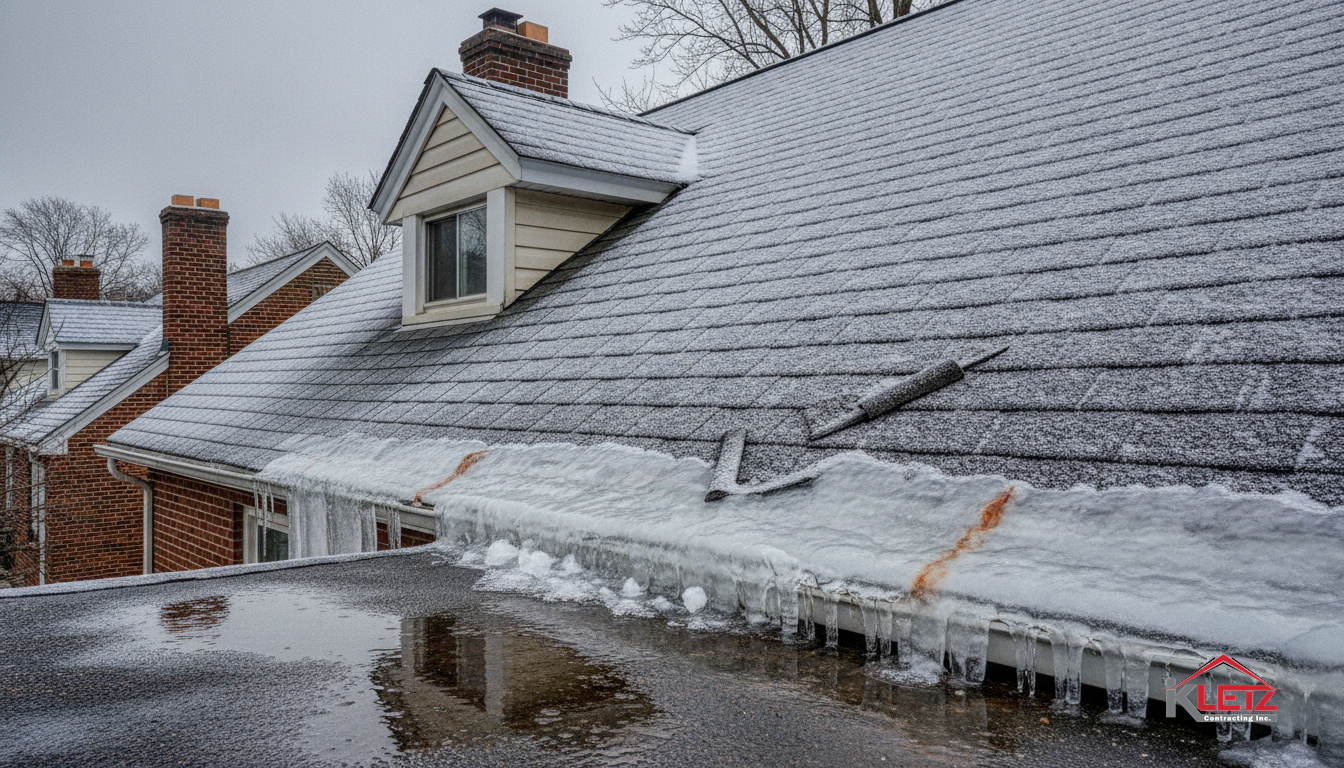
Ice dams are the most talked-about winter roof problem, and for good reason. They form when heat escaping from your living space warms the upper portion of your roof, melting snow that then refreezes at the colder eaves and gutters.
The result: a ridge of ice that traps meltwater behind it. That pooled water has nowhere to go except under your shingles — straight toward your decking, insulation, and interior ceilings.
In neighborhoods across Allegheny, Beaver, Butler, and Washington Counties, we see ice dam damage every single spring. The homes most vulnerable are those with older insulation, poor attic ventilation, or roofs that are simply past their service life.
2. Cracked and Lifted Shingles
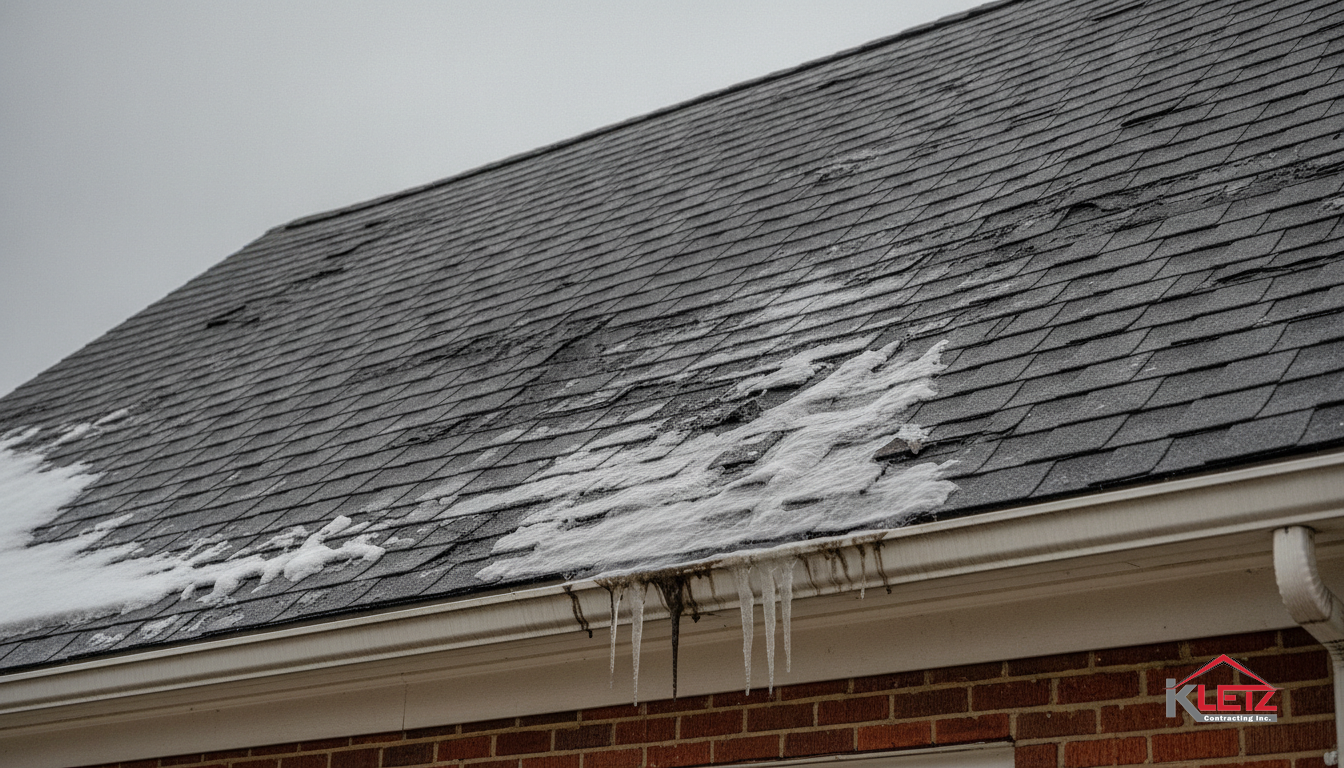
Asphalt shingles become brittle in cold weather. When freeze-thaw cycles repeatedly stress them — expanding and contracting the material — granules loosen, shingles crack along their length, and seal strips that hold shingles flat against each other give out.
Lifted shingles are particularly dangerous because they create an open invitation for wind-driven rain and debris to get underneath. A shingle that looks mostly intact from the ground can be completely compromised at its seams.
3. Flashing Failures
Flashing — the metal material that seals transitions around chimneys, skylights, vents, and wall intersections — expands and contracts at a different rate than the surrounding roofing materials. Over many freeze-thaw cycles, this differential movement causes the sealant and fasteners to loosen, creating gaps that are nearly invisible from the ground but highly effective at channeling water into your home.
This is one of the most common sources of mystery leaks we diagnose in the Pittsburgh area. Homeowners assume the shingles must be damaged, but the culprit is often the flashing around a chimney that's been slowly pulling away for two or three winters.
Your Ground-Level Inspection Checklist
You don't need to climb on your roof to catch early warning signs. A careful walk around your property — with binoculars if you have them — can reveal a lot. Check for these red flags:
- Missing or visibly cracked shingles along ridges, valleys, or near roof edges
- Granule accumulation in gutters or at downspout bases (looks like dark, gritty sand)
- Sagging or pulling gutters, which can indicate ice dam pressure or rotting fascia
- Visible daylight gaps around chimney flashing or where the roof meets a wall
- Staining or streaking on exterior siding below roof edges
- Ice dam remnants — staining, warped gutters, or lifted drip edge after thaw
- Soft spots or discoloration on interior ceilings, especially in upper floors or near exterior walls
- Attic check: look for daylight penetration, moisture staining on rafters, or frost buildup on the underside of decking
If you're seeing two or more of these signs, it's time to make a call before the next freeze cycle makes things worse.
When to Call a Professional — Don't Wait for Spring
One of the most common mistakes Pittsburgh homeowners make is assuming roof damage can wait until warmer weather. The problem: every freeze-thaw cycle between now and April is an opportunity for water to push deeper into your home's structure.
Call a roofing contractor immediately if you notice:
- Any active water infiltration inside your home
- Shingles missing after a wind event or ice storm
- Visible sagging anywhere on the roofline
- Flashing that's visibly separated or lifted
- Gutters that have pulled completely away from the fascia
Even if the damage looks minor, a professional inspection can identify compromised areas before they become structural problems. A few hundred dollars in targeted repairs now is a far better outcome than a full roof replacement that could run $8,000–$15,000 or more on an average Pittsburgh-area home.
Why Local Expertise Matters
Not every roofing contractor understands the specific demands that Pittsburgh winters place on residential roofing systems. The steep pitches on older homes in Allegheny County, the brick chimneys common throughout Washington and Beaver Counties, the mature tree canopy that blankets neighborhoods in Butler County — these are factors that shape how a roof performs and how it should be maintained.
At Kletz Contracting, we've been working on roofs throughout Robinson Township and the surrounding counties long enough to know exactly what Pittsburgh winters do to them. We know where ice dams form most often, which flashing configurations fail first, and how to identify freeze-thaw damage before it becomes a catastrophic leak.
Don't Let Another Winter Cycle Go By
Your roof is your home's first line of defense against everything Pittsburgh's climate can throw at it. The freeze-thaw cycles aren't going to stop — but the damage they cause is preventable with the right maintenance and the right team.
If you haven't had a professional roof inspection in the last two years, or if you've spotted any of the warning signs listed above, reach out to Kletz Contracting. We serve homeowners across Allegheny, Beaver, Butler, and Washington Counties with straightforward assessments, honest recommendations, and the kind of local knowledge that only comes from working these rooftops season after season.
Don't wait for the ceiling stain to tell you there's a problem.